
Why Your Smartphone Makes You Feel Dumb (Hint: It’s Not Your Brain, It’s the Phone)

Let’s clear something up right away. You are not stupid.
If you have ever stared at your smartphone as though it has personally betrayed you, or found yourself trapped in some mysterious submenu trying to do one very basic thing, it does not mean your brain is failing. It usually means you are trying to interact with a device that was designed by people who seem to believe symbols should be interpreted like cave drawings and that all human beings enjoy scavenger hunts.
A lot of people start to worry that if technology feels hard, especially as they get older, it must mean their mind is slowing down. I do not think that is necessarily true at all. In many cases, what is actually happening is a mismatch between how the human nervous system learns and how modern technology is presented.
For years, people believed that once you reached a certain age, your brain stopped changing. As though somewhere around midlife it just shrugged, clocked out, and said, "That is enough growth for one lifetime." We now know that is not true. The brain has an incredible ability to keep adapting throughout life. This is what we call neuroplasticity.
Your brain can still learn. It can still form new pathways. It can still take in new information and reorganize itself in response to new experiences. If you can learn a new route, adjust to a new season of life, remember who said what at Thanksgiving three years ago, or figure out how to keep an aloe plant alive longer than six days, your brain is still very much in the game.
So why does something like ordering a coffee on an app sometimes feel like applying to pilot a commercial aircraft?
Part of the answer is that intelligence does not come in only one form.
Psychologists often talk about fluid intelligence and crystallized intelligence. Fluid intelligence helps us solve new problems quickly, especially when there is no obvious structure and no one has explained anything properly. Crystallized intelligence is the intelligence that develops through lived experience. It draws on memory, pattern recognition, practical knowledge, and the kind of common sense that only arrives after years of being alive and dealing with actual things.
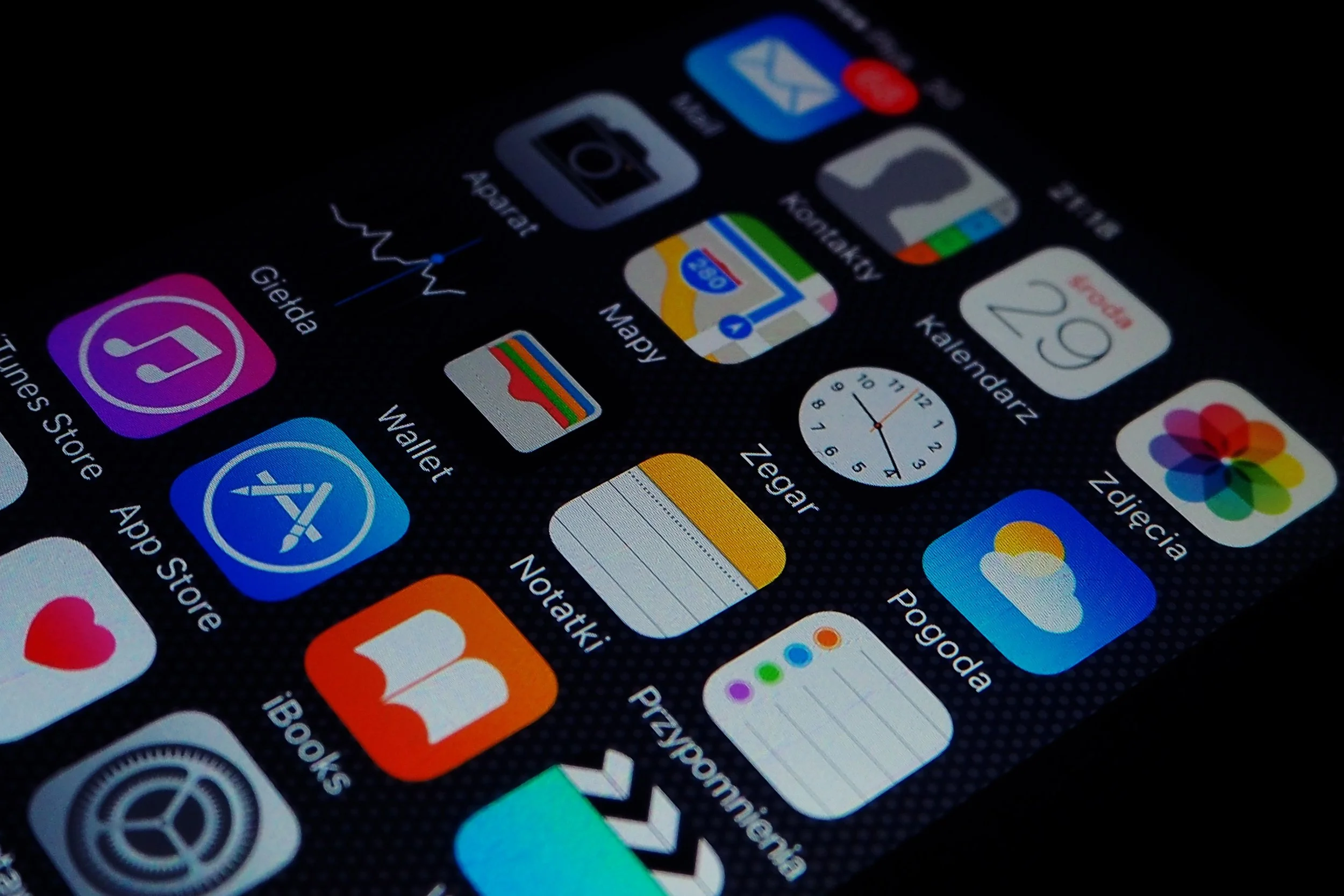
As people age, they often lean more naturally on crystallized intelligence. That is not a defect. It is a strength. It means the mind wants context. It wants logic. It wants things to make sense. Unfortunately, modern technology often responds to that very reasonable request by giving you a tiny icon of a cloud, a square with an arrow, and three mysterious lines in the corner, then acting as though the problem is yours.

The tools many people grew up with made physical sense. If you wanted to roll down a car window, you turned a crank. If you pushed a button, something visible and mechanical happened. There was a clear relationship between the action and the result. The object itself gave you clues.
Now you tap a symbol that looks like nothing in nature and are expected to know it means "archive," "airdrop," "duplicate," or perhaps "summon a hidden menu never to be found again." There is very little about that which is intuitive unless you were taught the language early on, or have spent enough time pressing random things with youthful optimism.
That is why I do not believe struggling with technology is a sign of low intelligence. I think it often means you are dealing with a system that is abstract, hidden, and oddly confident about how self-explanatory it is.
There is also the matter of caution, which I think deserves more respect than it gets.
A lot of younger people learned technology by experimenting. They tapped things, broke things, deleted things, restored things, and generally approached devices with the confidence of someone who has never lost an important file in 1997. They learned by trial and error because trial and error felt safe.
Many older adults had a very different introduction to technology. In earlier years, electronics could be expensive, temperamental, and far less forgiving. Press the wrong button and you could actually create a real problem. Work disappeared. Machines froze. Printers developed personalities. So when someone approaches new technology carefully, that is not irrational. That is a nervous system remembering that machines have, in fact, done damage before.
The fear of breaking it is not stupidity. It is often the residue of experience.

And then there is the emotional side of all this. If every frustrating interaction with a phone or tablet turns into "I am losing it" or "I am so bad at this," the nervous system gets tighter and more defensive. Shame is not a particularly good teacher. It rarely inspires curiosity. Mostly it just makes people want to hand the device to the nearest fourteen-year-old and leave the room.
The truth is, your brain has already learned far more complex things than an iPhone. It has learned how to navigate relationships, parent children, survive grief, manage households, read people, solve problems, work through conflict, and carry decades of lived experience. That is not a small thing. That is intelligence of a very high order.
It may simply be that modern technology often asks people to think in a way that feels unnatural. It asks them to trust invisible systems, memorize arbitrary symbols, and accept that sometimes the button they need is hidden for aesthetic reasons. Apparently clean design is now more important than letting people find things.

So if your smartphone sometimes makes you feel dumb, I would suggest a different interpretation. Maybe your brain is not failing at all. Maybe your brain is doing exactly what it was designed to do, which is look for coherence, meaning, and practical logic in an environment that often provides none of the above.
You are not behind.
You are not broken.
You are not stupid.
You are learning a language that was never properly taught, inside systems that are often less intuitive than the people designing them seem to believe.
That kind of struggle makes sense to me.
And maybe the real miracle is not that people find technology confusing.
Maybe the real miracle is that any of us can find the settings at all.
❤ Becca