
Pacific Oyster Mushrooms
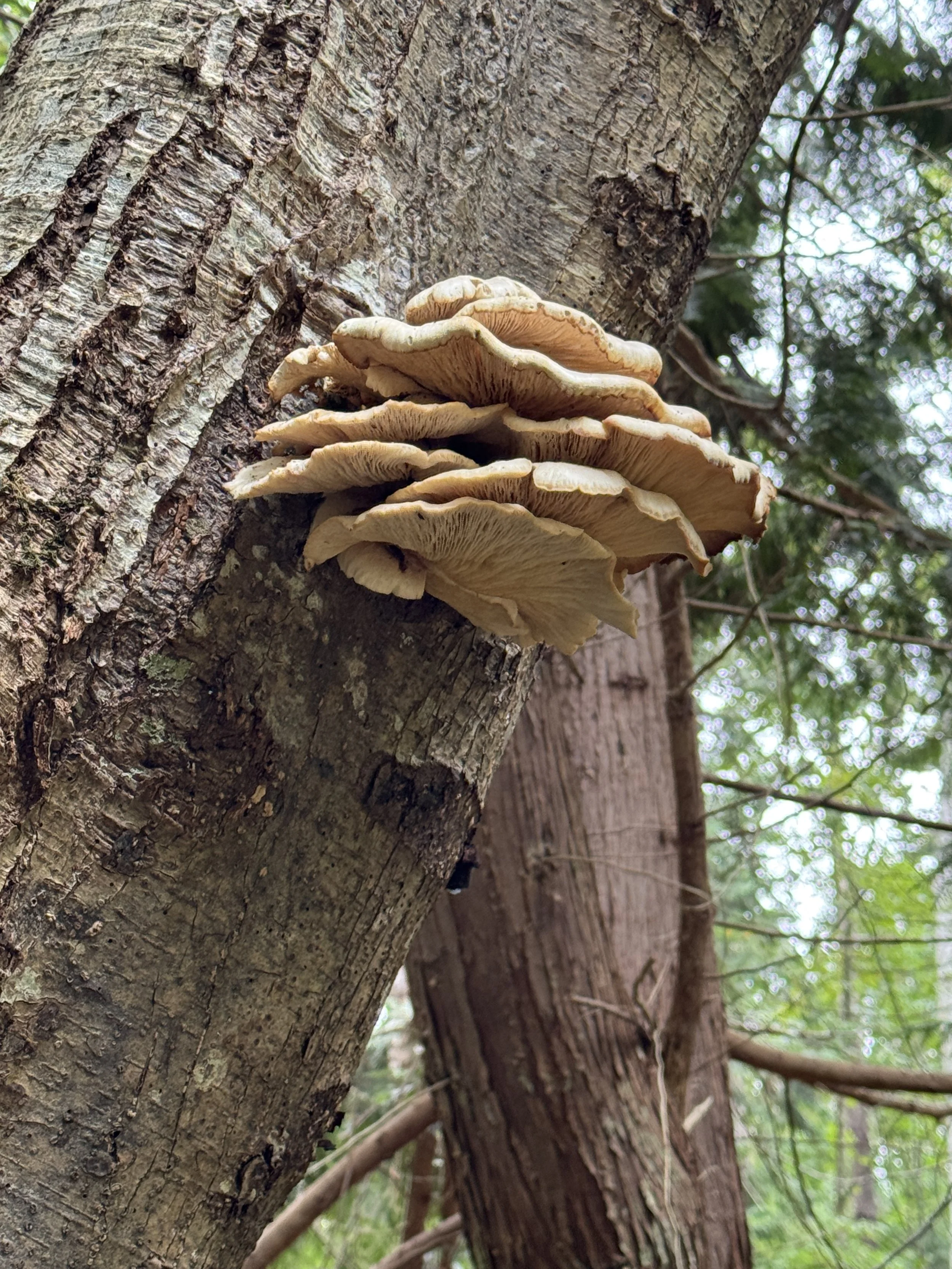
One of the benefits of having a coastal island cottage is the plethora of fungi you can find in the forest. Right now, Oyster mushrooms are plentiful and easy to find growing out of the trunks of alder trees. They are highly nutritious, low-calorie food packed with plant-based protein, dietary fiber, and essential B vitamins.
They get their name because they have a shape and colour like an oyster. There are approximately 40 species of oyster mushrooms, each having their own flavour and mild, sweet woodsy taste. The most common one we find up on the island is the “Pacific” Oyster mushroom (Pleurotus pulmonarius) which is usually cream, buff or light tan.
They are great decomposers that break down dead and dying hardwood trees, helping recycle nutrients back into the forest. They often appear after periods of rain and can continue fruiting from late spring into autumn. They usually grow in overlapping clusters, like a fan or oyster shell shape, with white, closely spaced gills running down their soft fleshy under belly to their attachment point.
They have a mild, earthy flavour, with slight sweet notes and a lovely delicate aroma that some might compare to seafood or anise. They have a wonderfully meaty texture that holds up well in cooking.
When harvesting them the edges should still be slightly curled rather than flattened. Avoid soggy, insect-ridden, yellowing, tough or woody ones. Cut the cluster of with a knfe rather than pulling it from the tree.
Unlike ground mushrooms, oysters are usually quite clean. Just brush away any debris. Trim the touch attachment point. Avoid soaking them in water as they absorb moisture quickly. If needed, you can briefly rinse them and then dry them thoroughly. You can store them in a paper bag and refrigerate but they are best to eat within 4-6 days. They also dry very well, free well after sauteing and make excellent mushroom powder once dried.
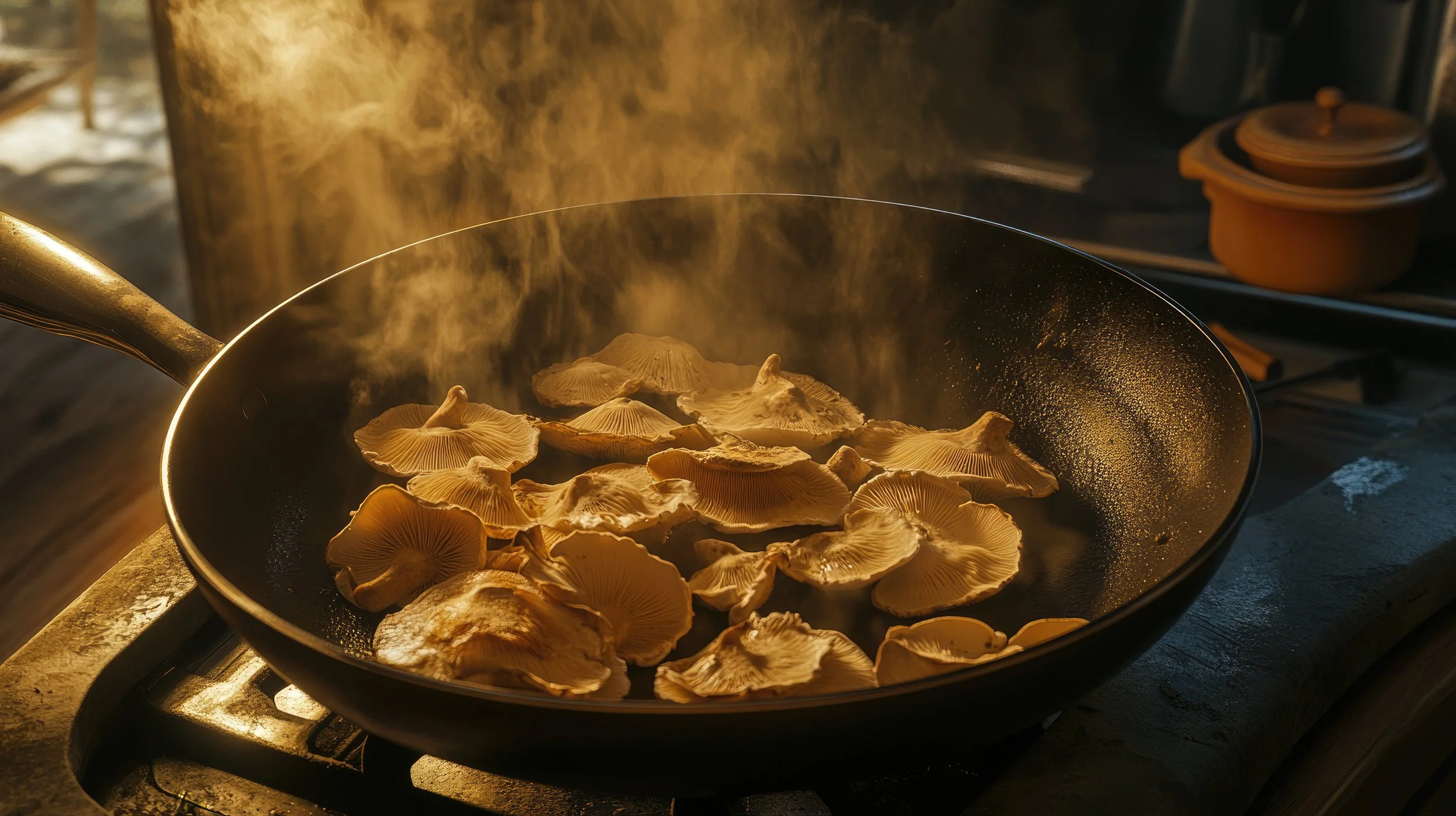
My favourite way to cook them are:
Ingredients
· Oyster mushrooms
· Olive oil
· Butter
· Garlic
· Fresh thyme
· Salt
· Pepper
· Lemon juice
Method
· Tear large mushroom into strips
· Heat a pan until very hot and add some oil
· Let the mushrooms brown without stirring too much.
· Add butter and garlic near the end.
· Finish with thyme and a squeeze of lemon juice.
The edges become beautifully crisp while the centers stay tender.
Fun Facts
· Oyster mushrooms can naturally digest wood using powerful enzymes that are studied for environmental cleanup.
· In nature, they can trap and digest tiny nematodes (microscopic worms), obtaining extra nitrogen – an unusual trait among edible mushrooms.
· They are one of the easiest gourmet mushrooms to cultivate at home on hardwood sawdust, straw or coffee grounds.
❤ Becca
One note of caution: although your mushroom looks very much like an oyster, never eat a wild mushroom based solely on an online identification or a photograph. If you plan to forage mushrooms regularly around Howe Sound, joining a local mycological society or learning from experienced foragers is an excellent way to gain confidence in identification. The coastal forests of British Columbia are home to an incredible diversity of edible fungi, and Pacific oysters are among the most rewarding species to learn.