
Different Modes of Sensing - Part 10: Highly Sensitive Person

New Ebook: Strengthening Your Clair Senses
Learn how to recognize and develop your intuitive abilities.
Highly Sensitive Person
Sensitivity is not weakness. It’s depth. It’s empathy. It’s noticing the things others miss
~Lee Harris

My societal conditioning growing up viewed sensitivity as a weakness. My ancestral lineage was a long line of soldiers and war heroes which looked at someone being too sensitive as being “soft” and feeble. I was told not to show this side of myself, having to contort and conform myself to being less “thin skinned”. This made me feel like I had to be guarded about exposing this hypersensitive side of myself. My family and their friends would do this eyeball rolling thing that nonverbally told me that they were disapproving and uncomfortable with this trait of mine. Being so sensitive has made me very susceptible to all types of sensory input – energy, speed, heights, noises, smells and touch. I was convinced it was a weakness or flaw, and I was afraid to let anyone know about my true sensitive self.
My self-confidence took a thrashing because of this and some of the quirks I formed when I was young, including having trouble making direct eye contact with people. For me it just felt too bold, revealing and intense. I felt compelled to drop my eyes because I would get this weird clenching nervous feeling in my upper abdomen that would make me blush and feel uncomfortable. When my eyes met someone else’s, I felt like I was too wide-open in a way that might expose me to being judged disapprovingly. I would usually drop my eyes submissively hiding myself under the facade of being timid and shy.
I really don’t like doing anything to purposely scare myself. I’ve never understood why people like scary and dangerous activities such as skydiving. I don’t even like going on amusement park rides. Just thinking about going on a roller coaster or Ferris wheel is enough to turn my stomach upside down. My abdomen just starts to clench creating pressure under my sternum, making it difficult to breath. It’s as though I’m being shrink wrapped. I don’t like heights and the idea of plunging down a steep hill uncontrollably is not my idea of fun. Skiing was never one of my passions or strengths! No one likes me as a passenger in their car because I get nervous and jumpy with any type of speed or unexpected bumps and turns.
All my senses seem to be quite hypervigilant. Certain sounds will bother me like people chewing or swallowing their food. I can’t sit in a restaurant beside someone who is open mouth chewing without feel completely aggravated and revolted. It’s like someone scratching their nails down a chalkboard right beside my ear, in my mind, and it overrides my ability to think. My nose is incredibly sensitive, and I can decipher the individual scent of a person; some are nice, some are not so nice. If someone has been drinking or eating something spicy or strong or has any type of pungent body odour, I am able to smell them across a large room.

I get a feeling of apprehension on my upper back like a scratchy cape when someone is lying, being deceptive or hiding something. Not only do I pick up on their subtle body language, but I will physically feel their uneasiness gripping me in the chest and neck. If it’s strong enough it can push up into my throat and make me feel almost like I’m choking.
Because of the research of Dr. Elaine Aron, who coined the term Highly Sensitive Person (HSP), in the 1990’s, as well as other strong researchers who followed in her footsteps, we are living in a time that it normalizes sensitive people. According to Dr. Aron's work, being a HSP is not a mental disorder but rather an innate, biologically influenced trait that includes deep processing of information and high empathy. Try the self-test she created and see where you score.
Highly Sensitive Person (HSP) traits include:
Deep reflection and overthinking
Strong emotional responses
Heightened empathy
Sensitivity to noise, light, smell, touch, or chaos
Easier overstimulation
Strong intuition about people and environments
A HSP is someone with a nervous system more sensitive to physical, emotional, or social stimuli. Early research indicated that roughly 15%-20% of the population possess this trait, but in more recent years, it’s now thought to be more like 1/3 of the population. Thankfully there has been more public awareness and acknowledgment of the trait, so less people are hiding this crucial part of themselves and more willing to confess to being this way. Sensitive people still feel unusual, they are not typically out in public among others as they can find the world overwhelming. The world is not set up for HSP’s. I live out in the farmlands with lots of green space around me for a reason! The hustle and bustle of the city feels too frenetic.
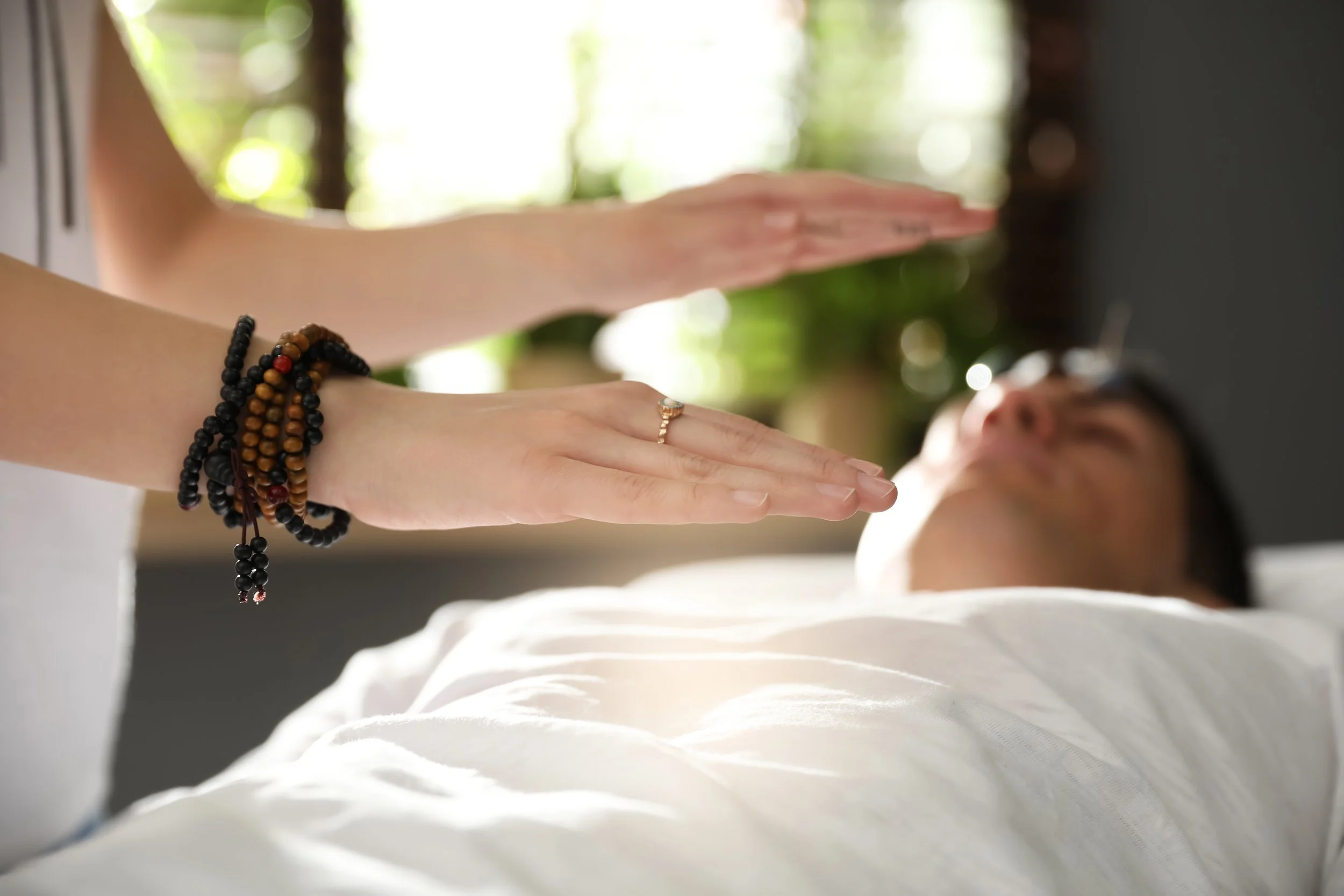
Sensitivity is not a flaw! Many of history’s greatest innovators and change-makers have been highly sensitive. HSP’s are often empathetic, creative, intuitive, and thoughtful. But it can make day-to-day life overwhelming for them as it can feel as though the volume is turned up too high; all the time. Due to this trait, they tend to be drawn to helping professions such as therapy and teaching, and they often become caregivers for their friends and family. Their empathy often surpasses that of the regular definition of the word. Rather than simply noticing what someone else is feeling, many of us actually “feel it ourselves,” in our own bodies.
Recently, I had a person staying in our home that was going through a difficult breakup. I could feel all their anger, agony and heartbreak that they were going through. It rubbed up against me like a stinging nettle re-traumatizing me into remembering my own tortuous “breakup” at the same young age. I found myself becoming anxious, sad, grieving along with them and secretly having to run to my room to cry because I was unpleasantly reliving my past along with their pain. This is one of the reasons I hate drama and conflict so much. I can see and feel it all.
I have spent many years working on gaining the skills and tools to look after myself with this trait, but it still gets me if I don’t guard myself. I’m hyper aware of all the signs of when I’m absorbing the emotions of others and spend a lot of time doing some type of Daily Energy Routine to help myself stay in balance. On a positive note, as tiring as it can be, it has become a great asset in my job or in situations that require a little “mind reading.”
As an Energy Medicine practitioner, when I’m working on my clients, I have this heightened ability, when I put my hands on them, to sense areas that are physically or emotionally out of balance. I get little pokes, jabs, buzzes, and emotional sensations that tell me to either go check on that area of their body or it prompts me to ask how they are doing psychologically. Traditional Chinese medicine has mapped where our bodies hold certain types of emotions for thousands of years and people are always shocked at how I am able to discern their areas of pain or psychological discomfort before they can recognize it within themselves.
This isn’t due to some extraordinary magical ability. Science tells us that we all have special brain cells that help us to understand what another person is experiencing called mirror neurons. HSP’s don’t necessarily have more mirror neurons than others, but our mirror neurons tend to be more active. When they do imaging of the brains of HSP’s it is shown that they have higher levels of activity in key parts of the brain related to emotional and social processing. For less sensitive people, it’s easy to tune out other people. “But for an HSP, almost everything about the brain is wired to notice and interpret others”.
As a result of our mirror neurons, we have above average levels of empathy. It also means we may absorb others’ emotions and find ourselves feeling sad, irritable, or stressed even when we had a perfectly good day ourselves! These emotions do not stay separate from us. Many HSPs would struggle to enter even a slightly tense atmosphere and not feel tense themselves. While most people can pick up on the emotions of others to some extent, thanks to mirror neurons, for many HSPs, the experience is much more common and intense. We can walk into a room and immediately sense tension, joy, discomfort, sadness, etc., without any verbal communication. In a way, we are master non-verbal communicators. Mirror neurons also work by comparing other people’s behaviour with our own behaviour; “mirroring” them to figure out what’s going on. This is why yawns and laughter are contagious.
When this trait starts functioning at high speed, it becomes emotionally exhausting, leaving my tank completely empty. How well I use this gift all comes down to my own self-care. Many people don’t know how to manage this and end up burnt out by overdoing for others, or underdoing, unable to cope in the frenetic world they are surrounded by. Other people’s needs always come first leading to putting our own needs aside. HSP’s commonly find themselves being under nourished and leaning into self-sabotaging or self-destructive behaviours. It’s important to learn how to move your sensitivity through your system in constructive ways.
For starters if you are highly sensitive, the world desperately needs more people exactly like you. Let go of the fear that you are “too much”. Your sensitivity only becomes a problem when you don’t look after it. Here are some of my “go to” self-care strategies when I find the people in the room or the world that surrounds me is getting too much in my face.
Get grounded. Bringing your energies back into your body rather than twisting up in the air, is a great thing to learn how to do. I tell my clients to think of themselves like a kite. To fly confidently higher, you need to be held securely by a tethered support instead of allowing the surrounding whirlwinds to take you out of control. Sensitive nervous systems often think they must either suppress emotion or drown in it. You can allow the feeling while staying connected to your breath and body. Your feet, your breath and the ground are anchors that can support you. Get your feet on the grass and imagine roots extending from your body, strong and steady, plugging into the earth. The earth has an enormous capacity to diffuse overwhelm. All you need to do is imagine a gentle surrender of all that is distressing you draining down into the ground bringing you back into your body and allowing more space into your heart.
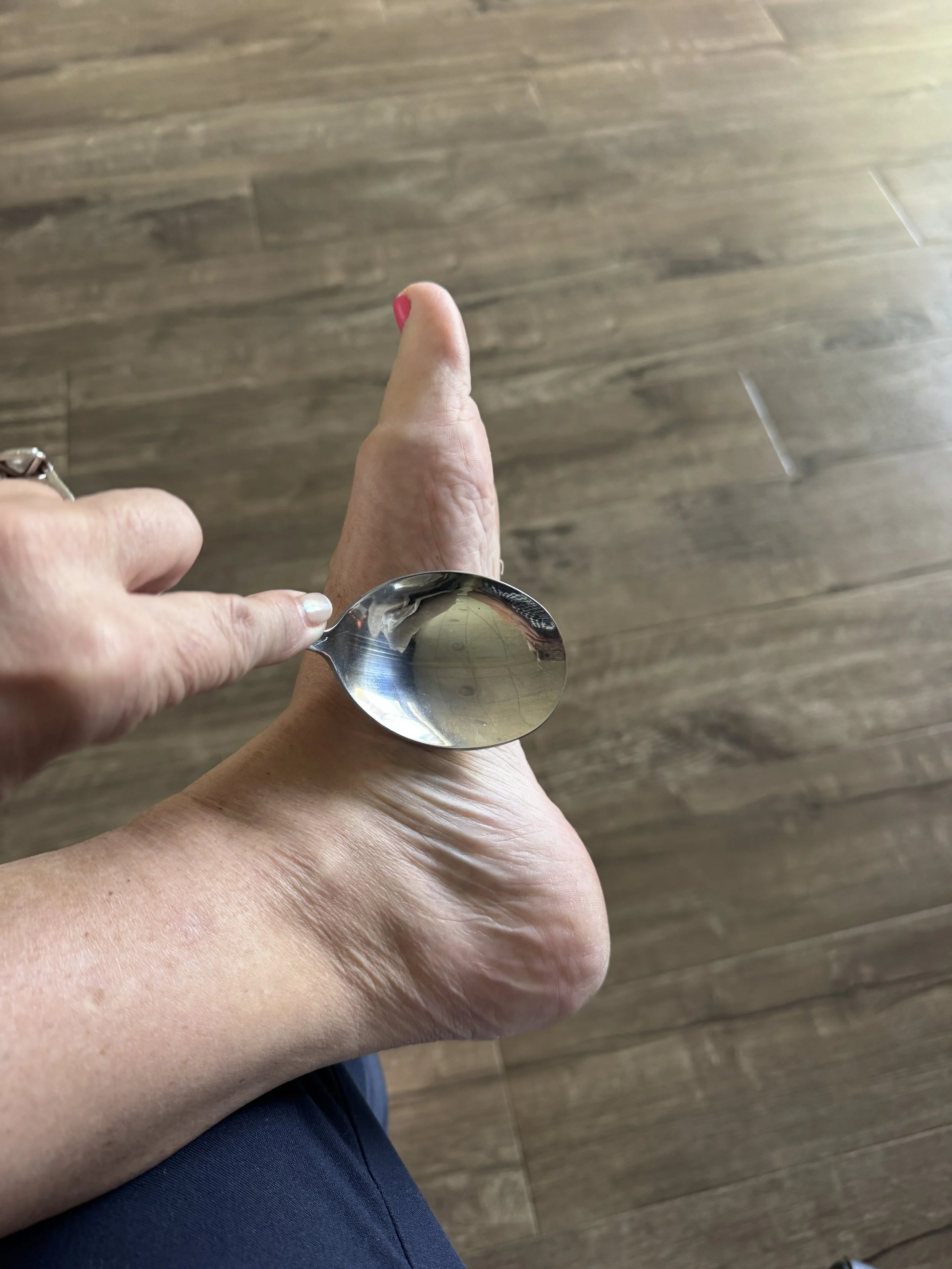
Of course, the best thing to do is get out in nature. This is the biggest resource and support you have. If you can’t find a patch of earth, Donna Eden has a great trick of using a stainless-steel spoon. It must be stainless steel, a magnet will stick to it if you want to confirm. By rubbing your feet with this spoon you will attract, like a magnet, the iron from your blood to flow down towards your feet. This is a simple technique that will correct you’re out of whack polarities. This helps you to plug back in and brings you back down to earth.
Protect your boundaries. We have a biofield produced by our heart and brain that some ancient cultures refer to as an aura. This is a complicated energy system, that is multilayered, that can be easily disturbed by solar flares, EMFs, technology and external environments, along with our own internal emotional upsets. Think of it like your spacesuit that protects you from the harsh outer world. HSP’s auras tend to become a little more porous than others and needs more care to keep them impenetrable. I am always doing lots of Zip Ups, Hook Up’s and Donna Eden’s Celtic Weave exercise. If I’m somewhere that I feel too self-conscious or exposed I just imagine one of my favourite colours pouring down, like a thick paint, from above my head, covering me like a waterfall. Think of yourself living inside this arm’s length, or bigger, protective bubble that has a 2” thick outer membrane. Imagine the paint filling your bubble’s membrane wall that is protecting all your sensitive energies inside of it. It will become your supersonic shield armouring you away from the chaotic outer world.
Prioritize Rest. Sleep is especially important for sensitive nervous systems. Without enough rest, emotional regulation becomes harder, overstimulation increases, and stress builds more quickly.. Many HSPs function best when they consistently protect their sleep, downtime, and recovery time.
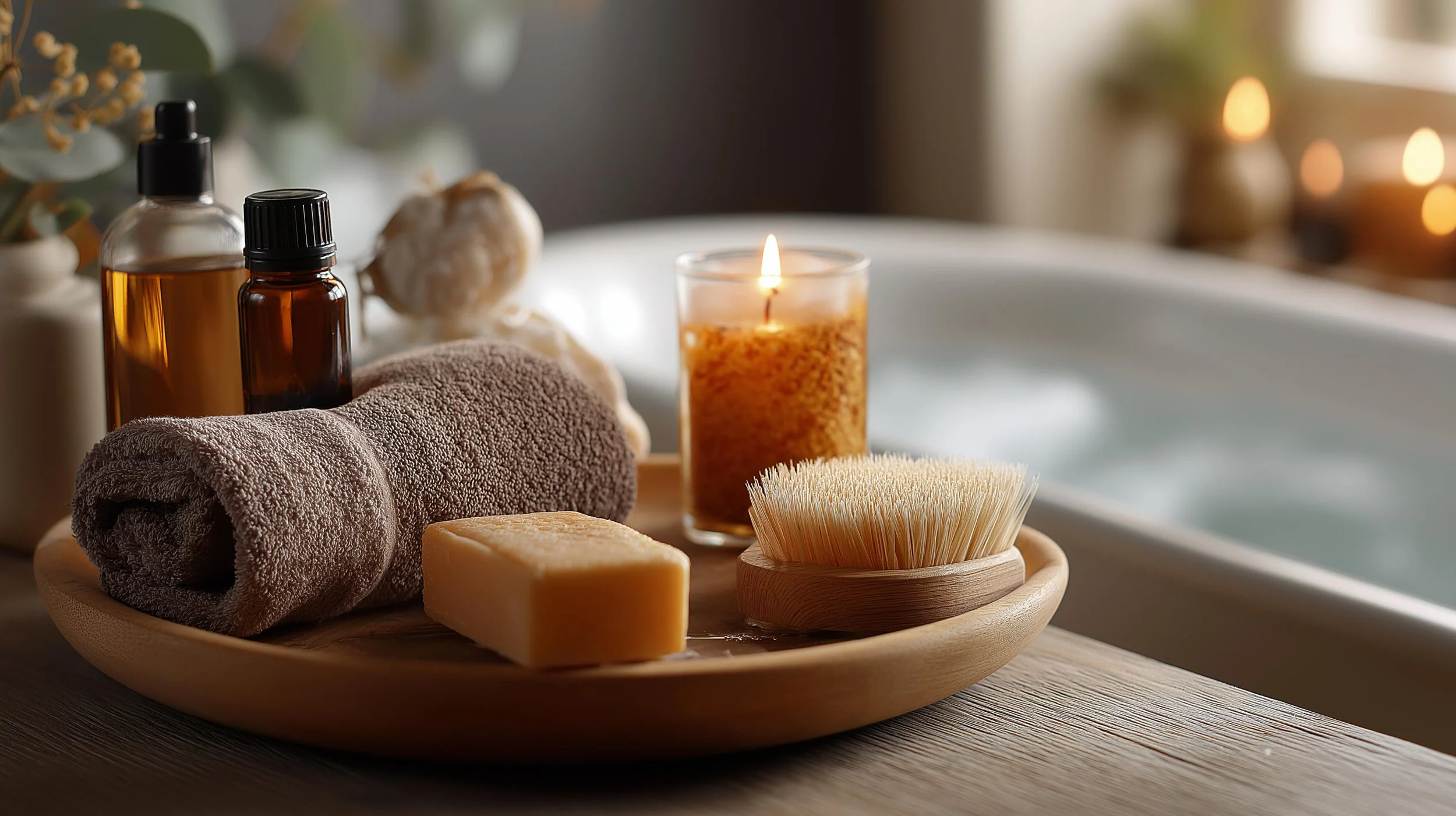
Reduce overstimulation. Taking breaks from noise, screens, crowds, or emotionally intense environments can dramatically improve wellbeing. Sometimes even a few quiet moments alone can help reset an overwhelmed nervous system. Activities like warm baths, calming music, reading, journaling, or time in nature can be deeply regulating. These types of practices can help to clear the static and reset the nervous system. Listen to relaxing music surrounding yourself with beauty and artwork. I love Lee Harris’s music. He’s spent a great deal of time calibrating his songs to a frequency that soothes and restores you to your vital beautiful self.
Have a good cry. I’m known to cry easily when something moves, scares, or overwhelms me, and I’ve learnt that this is one of the best ways to release pent up energy blocking emotions.
Choose friends who are positive. An essential piece of the puzzle is to choose friends who are positive, compassionate, and nonjudgmental. HSPs must keep company with those who have curious minds and open hearts. I finally found my people when I joined the Eden Method family. Going through their certification program and advanced levels introduced me to friends that I now have from all over the world that are just like me!

The World Needs Sensitive People
Sensitivity is not something to apologize for or hide. The goal is not to become less sensitive - it’s to learn how to support your nervous system so your sensitivity becomes a strength instead of a burden. When cared for properly, sensitivity allows people to connect deeply, create meaningfully, lead compassionately, and help others feel seen and understood. Your sensitivity may be the very thing that allows you to bring more kindness, awareness, healing, and depth into the world.
❤ Becca
Ready to explore your intuitive gifts more deeply?
The ebook Strengthening Your Clair Senses expands on all nine clair senses and provides practical ways to begin strengthening them.
→ Get the ebook
Learn all the Different Modes of Sensing: